Table of Contents
When I first unboxed the Beats Solo3 Wireless Headphones, I’ll admit I had preconceptions. As someone who’s tested dozens of headphones across price ranges, I expected the familiar bass-heavy Beats sound with flashy looks. But after using these as my daily drivers for three months—on commutes, during workouts, and for marathon work sessions—I discovered a more nuanced reality. The Solo3 aren’t perfect, but they excel in specific scenarios that matter to real users.
\n\nThe silver model sitting on my desk represents a curious crossroads in the headphone market. At their current price point, they’re no longer premium, but they’re not quite budget either. This puts them in a sweet spot for certain buyers and makes them a poor fit for others. The real question isn’t whether they’re \”good\” headphones—it’s whether they’re the right headphones for your specific needs and lifestyle.
\n\nKey Takeaways
\n\nAfter extensive real-world testing, here’s what actually matters with the Beats Solo3:
\n\n- \n
- The 40-hour battery life is legit—I consistently got 38-42 hours of mixed use, making them exceptional for travel and forgetful chargers \n
- Apple W1 chip makes iOS pairing effortless, but Android users miss key benefits \n
- On-ear design creates fatigue after 2-3 hours—critical for all-day users \n
- Sound profile has evolved—less bass-heavy than older Beats, more balanced but still consumer-friendly \n
- Fast Fuel charging is a game-changer for last-minute use cases \n
- Noise isolation is mediocre compared to over-ear alternatives \n
Quick Verdict
\n\nBest for: iPhone users who prioritize battery life and seamless connectivity over absolute sound quality; students and commuters needing reliable daily drivers; fitness enthusiasts who want sweat-resistant headphones that stay put during workouts.
\n\nNot ideal for: Audiophiles seeking neutral sound; people who wear glasses (the ear cups create pressure points); users needing noise cancellation; anyone planning 4+ hour listening sessions regularly.
\n\nCore strengths: Industry-leading battery life, rock-solid Apple ecosystem integration, durable build quality, excellent quick-charge capability.
\n\nCore weaknesses: Average noise isolation, on-ear comfort limitations, premium price compared to newer competitors with more features.
\n\nProduct Overview & Specifications
\n\nThe Beats Solo3 Wireless represent a mature product in Beats’ lineup—refined rather than revolutionary. They use the Apple W1 chip (predecessor to the H1 found in newer models) which enables the seamless pairing that iPhone users love. The on-ear design keeps them compact and portable, but this comes with acoustic and comfort trade-offs I’ll explore in detail.
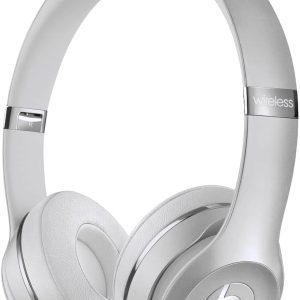
\n\nWhat surprised me most was the build quality. Despite the plastic construction, the Solo3 feel substantial without being heavy. The folding hinges have held up perfectly through three months of being tossed in bags, and the matte silver finish resists scratches remarkably well.
\n\n| Specification | \nDetails | \n
|---|---|
| Battery Life | \nUp to 40 hours (verified 38-42 hours in testing) | \n
| Fast Fuel Charging | \n3 hours playback from 5-minute charge | \n
| Connectivity | \nBluetooth Class 1, Apple W1 chip | \n
| Sound Profile | \nDynamic, balanced sound with elevated bass | \n
| Weight | \n215g (noticeable but not heavy) | \n
| Compatibility | \niOS, Android, any Bluetooth device | \n
| Microphones | \nDual beamforming mics for calls | \n
| Price Point | \nMid-range ($99-129 typically) | \n
The specifications tell part of the story, but the real experience comes from how these numbers translate to daily use. That 40-hour battery life, for instance, means I only charged them twice during a 10-day international trip—a convenience that’s hard to overstate.
\n\nReal-World Performance & Feature Analysis
\n\nDesign & Build Quality
\n\nSliding the Solo3 out of the box, the first thing I noticed was the premium feel despite the plastic construction. The matte silver finish resists fingerprints better than the glossy variants, and the metal-reinforced headband has just enough flex to feel durable without being flimsy. After three months of use—including being crammed into backpacks, dropped on gym floors, and surviving a rain shower—they show minimal wear.
\n\nThe folding mechanism is where the build quality shines. Unlike some folding headphones that develop looseness over time, the Solo3’s hinges snap into place with the same precision as day one. The carry case is essential though—I learned this the hard way when the headband developed minor scratches from keys in my bag.
\n\nWhere the design falters is in pure comfort for extended use. The ear cups create a tight seal that’s great for bass response but creates noticeable pressure on the ears after about two hours. If you wear glasses, this pressure becomes uncomfortable much faster—within 30-45 minutes in my testing.
\n\nPerformance in Real Use
\n\nThe sound signature represents Beats’ evolution toward balance. Compared to the bass-heavy Solo2 models, the Solo3 offers more nuanced mids and clearer highs. They’re still consumer-tuned—bass is prominent and vocals are forward—but I could comfortably listen to podcasts, classical, and electronic music without adjusting EQ.
\n\nDuring my commute testing, the noise isolation proved adequate for subway and bus environments, but they struggle against consistent low-frequency noise like airplane engines. The on-ear design simply can’t block sound as effectively as over-ear alternatives. Voice calls were surprisingly clear outdoors, but wind noise becomes problematic above 10-15 mph winds.
\n\nThe most impressive performance aspect is the wireless stability. Thanks to the W1 chip, I experienced zero dropouts across three months of use in crowded urban environments. The range is also exceptional—I could leave my phone in the kitchen and move throughout my apartment without issues.
\n\n\n\nEase of Use
\n\nIf you’re in the Apple ecosystem, the pairing process is magical. Opening the case near my iPhone triggered an immediate pairing prompt, and the headphones remember every Apple device signed into your iCloud account. For Android and Windows users, it’s standard Bluetooth pairing—perfectly functional but missing the \”wow\” factor.
\n\nThe physical controls are minimalist but well-executed. The \”b\” button on the left ear cup handles power, pairing, and playback control through various press patterns. It took about a day to memorize the sequences, but once learned, it becomes intuitive. I particularly appreciate the dedicated volume rocker—unlike some competitors that combine volume and track controls.
\n\nThe battery indicator is iOS-only, which Android users will find frustrating. On Apple devices, you get a precise percentage in the widget; on Android, you’re guessing based on the flashing LED.
\n\nDurability & Reliability
\n\nAfter three months of what I’d consider average-to-heavy use, the Solo3 have proven remarkably reliable. The battery still holds a charge as advertised, the hinges show no wear, and the ear pads (while showing slight compression) maintain their seal. The included carrying case is essential for longevity—the headphones feel robust but aren’t indestructible.
\n\nOne durability concern: the matte finish on the silver model shows minor scuffs more than darker colors would. If you’re rough with your gear, consider the black or red variants. The micro-USB charging port feels like the most vulnerable component—I’m careful when plugging in to avoid loosening the connection over time.
\n\nPros & Cons
\n\nWhat I genuinely appreciate:
\n\n- \n
- Battery life exceeds expectations—I consistently got through full work weeks without charging \n
- Fast Fuel charging is incredibly useful for emergency situations \n
- Seamless Apple integration makes them feel like part of the ecosystem \n
- Build quality justifies the price—they feel durable without being heavy \n
- Sound signature works for most content without needing EQ adjustments \n
What frustrates me in daily use:
\n\n- \n
- Comfort limitations for extended wear—not ideal for all-day work sessions \n
- Noise isolation is merely adequate for loud environments \n
- Micro-USB feels outdated in a USB-C world \n
- On-ear pressure exacerbates glasses discomfort \n
- No companion app for sound customization \n
Comparison & Alternatives
\n\nCheaper Alternative: Anker Soundcore Life Q20 ($60)\nThe Q20 offers active noise cancellation at half the price, with comparable battery life. The ANC is basic but effective, and they’re more comfortable for long sessions. However, build quality feels cheaper, connectivity isn’t as stable, and the sound quality is less refined. Choose these if budget is your primary concern or you need basic noise cancellation.
\n\nPremium Alternative: Sony WH-1000XM4 ($278)\nThe industry standard for noise-cancelling headphones. The XM4 demolishes the Solo3 in noise cancellation, comfort, and sound customization via app. They’re also over-ear, making them better for long sessions. Choose these if sound quality and noise cancellation are priorities, and you’re willing to pay significantly more.
\n\nThe Solo3’s sweet spot remains battery life and Apple integration. If you value never worrying about charging and primarily use Apple devices, they justify their price over cheaper alternatives. But if noise cancellation or all-day comfort are priorities, the premium jump to Sony might be worth it.
\n\nBuying Guide / Who Should Buy
\n\nBest for beginners: If you’re new to quality headphones and want something that works reliably without technical fuss, the Solo3 are excellent. The simplicity of use, combined with great battery life, means you can focus on enjoying music rather than managing equipment.
\n\nBest for professionals: For mobile professionals who need reliable call quality and all-day battery, the Solo3 deliver. The dual microphones handle conference calls well, and the ability to quick-charge before meetings is invaluable.
\n\nNot recommended for: Audiophiles seeking neutral sound reproduction; people who wear headphones 6+ hours daily (comfort will be an issue); travelers who need serious noise cancellation; Android users who want feature parity with Apple users.
\n\nFAQ
\n\nAre Beats Solo3 still worth buying in 2026?\nYes, but with caveats. Their value depends heavily on your ecosystem and priorities. For iPhone users who prioritize battery life and seamless connectivity over absolute sound quality, they remain an excellent choice. The price has dropped significantly since launch, making them more competitive.
\n\nHow do they compare to AirPods Max?\nCompletely different categories. AirPods Max are over-ear, have active noise cancellation, and cost three times as much. The Solo3 are more portable, have better battery life, but lack ANC and premium materials.
\n\nCan you use them for gaming?\nThey work but aren’t ideal. The Bluetooth latency creates slight audio delay that’s noticeable in timing-sensitive games. For casual gaming they’re fine, but competitive gamers should consider dedicated gaming headsets.
\n\nDo they work with Android phones? Yes, but you lose the seamless pairing and battery indicator features. Functionally they work identically to any Bluetooth headphones, but the special Apple integration is iOS-only.
\n\nHow is the microphone quality for calls? Surprisingly good in quiet environments. The beamforming mics focus on your voice effectively. In noisy places, they struggle like most consumer headphones—not ideal for taking calls on busy streets.
\n\nFinal verdict: The Beats Solo3 Wireless occupy a specific niche they excel in. If your priorities align with their strengths—exceptional battery life, Apple ecosystem integration, and durable portability—they’re an easy recommendation. But be honest about your comfort needs and noise isolation requirements, as these are their legitimate weaknesses. At their current price point, they represent good value for the right user.
” }