Table of Contents
You’re researching noise-cancelling headphones and keep seeing the Beats Studio Pro pop up. The marketing looks great – premium sound, active noise cancellation, that signature Beats style – but you’re wondering: do they actually deliver for the price? More importantly, are they the right choice for your specific needs, or just another pair of overhyped headphones?
After using the Beats Studio Pro Wireless as my daily drivers for three months across commutes, work sessions, and travel, I’m here to give you the real story. Not just the specs sheet, but what actually matters when you live with these headphones day in and day out. Where they excel, where they compromise, and who should seriously consider looking elsewhere.
Key Takeaways
- The Beats Studio Pro offer surprisingly competent noise cancellation that holds up well in daily commuting and office environments, though they fall slightly short of class leaders in absolute silence.
- Battery life is solid at up to 30 hours with ANC off, but real-world mixed usage typically yields 22-26 hours – enough for most users but not class-leading.
- The sound signature has matured significantly from earlier Beats models, offering better balance while retaining that engaging bass response popular music lovers appreciate.
- Comfort is excellent for moderate sessions but the firm clamp force becomes noticeable during extended 6+ hour wear, especially for those with glasses.
- The lack of multipoint Bluetooth pairing is a genuine inconvenience in multi-device workflows, requiring manual switching between phone and computer.
Quick Verdict
Best for: Apple ecosystem users who prioritize style and engaging sound for music and videos; commuters needing solid noise reduction; those who want good performance without premium price tag.
Not ideal for: Audio professionals needing neutral reference sound; serious travelers requiring absolute maximum noise cancellation; multi-device power users who need seamless switching.
Core strengths: Balanced feature set at competitive pricing; excellent Apple integration; mature sound profile with satisfying bass; reliable connectivity.
Core weaknesses: No multipoint Bluetooth; comfort diminishes on very long sessions; noise cancellation good but not class-leading.
Product Overview & Specifications
The Beats Studio Pro represent Beats’ most significant update to their flagship over-ear headphones in years. Positioned as a premium but accessible alternative to the Sony WH-1000XM5 and Bose QuietComfort Ultra, they deliver a compelling package of features without reaching the highest price tier.
| Specification | Details |
|---|---|
| Battery Life (ANC on) | 24 hours |
| Battery Life (ANC off) | 30 hours |
| Charging | USB-C, Fast Fuel (10min = 4hrs) |
| Connectivity | Bluetooth 5.3, 3.5mm analog, USB-C digital |
| Weight | 260g |
| Noise Cancellation | Active Noise Cancelling (ANC) with Transparency mode |
| Voice Assistant | Siri, Google Assistant compatible |
| Price Point | Mid-premium ($196-$349 depending on sales) |
What the specifications don’t tell you is how these elements come together in daily use. The 24-hour battery rating is reasonably accurate for mixed ANC usage, though heavy voice call users might see slightly less. The weight distribution is well-balanced, making them feel lighter than they measure.
Real-World Performance & Feature Analysis
Design & Build Quality
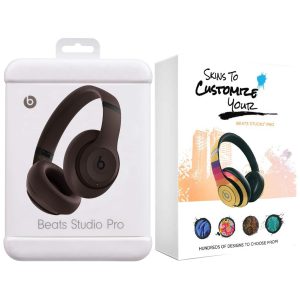
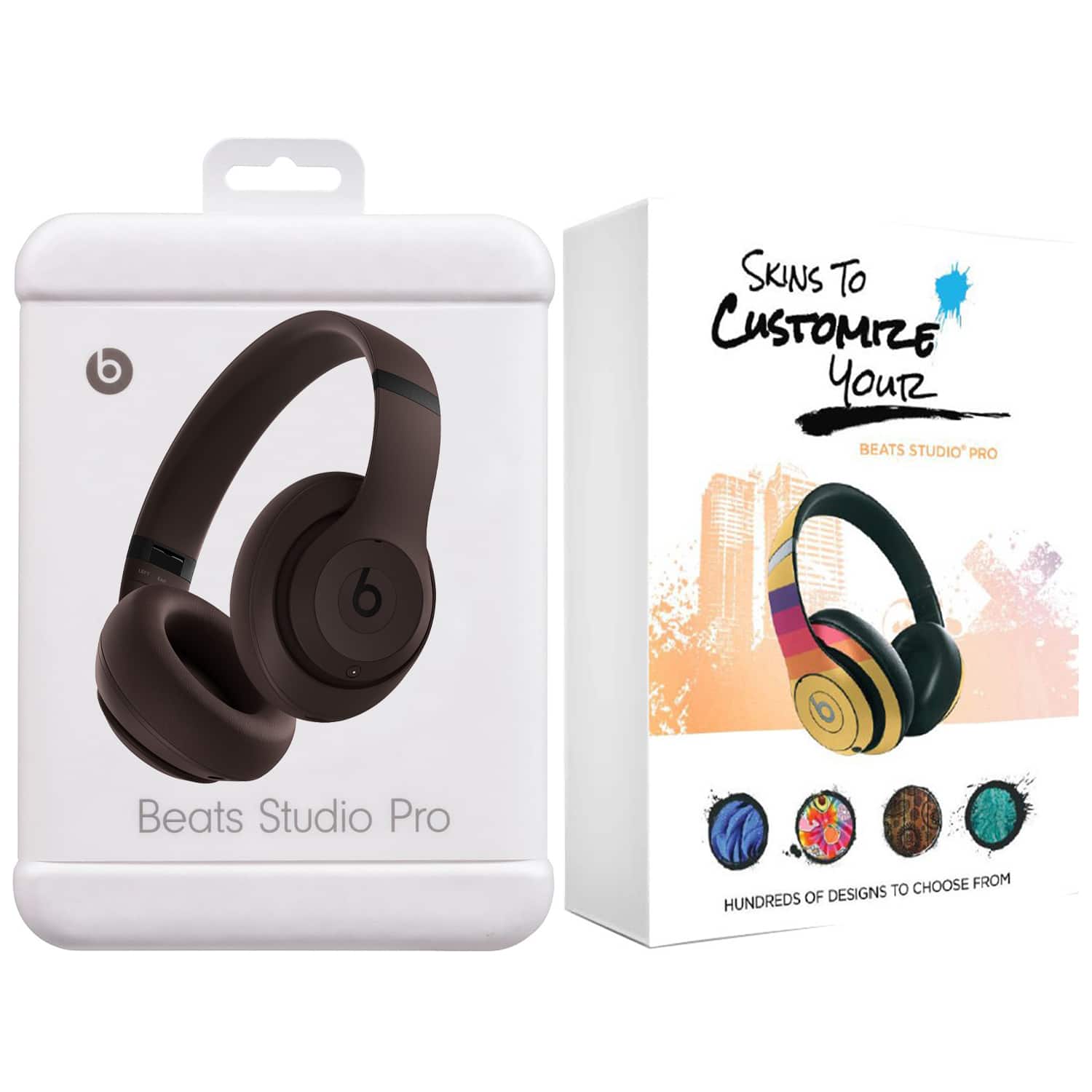
The Studio Pro maintains Beats’ recognizable design language but with noticeable refinements. The plastic construction feels sturdy rather than cheap, and the hinges have a solidity that suggests good long-term durability. The Deep Brown colorway with MightySkins customization offers protection against minor scratches while adding personality – a practical touch for daily carry.
Where the design shows compromise is in the folding mechanism. While they fold flat for storage, they don’t collapse as compactly as some competitors. The included case is adequately protective but bulkier than what Sony offers with their WH-1000XM5. For frequent travelers, this might mean sacrificing some backpack real estate.
Performance in Real Use
The noise cancellation performs admirably in most environments. On my daily subway commute, it effectively dulls the rumble of train tracks and reduces conversational chatter to background murmur. However, compared to the absolute silence offered by Bose’s latest QuietComfort models, you’ll still detect higher-frequency sounds like crying babies or announcement chimes.
The sound signature represents Beats’ most balanced offering to date. The bass remains present and punchy – perfect for hip-hop and electronic music – but doesn’t overwhelm mids and highs like earlier models. In practice, this means acoustic guitars and vocals maintain clarity while still delivering that rhythmic energy Beats is known for.
I used these extensively for video calls, and the voice pickup is surprisingly good. Colleagues reported my voice sounded clear even in moderately noisy environments, though wind can still cause issues during outdoor calls.
Ease of Use
For Apple users, the integration is seamless. The quick pairing process familiar to AirPods users works flawlessly, and switching between Apple devices signed into the same iCloud account happens automatically. Android users get a slightly more standard Bluetooth experience but still benefit from the Beats app for firmware updates and basic controls.
The physical button controls take some adjustment if you’re coming from touch-sensitive headphones. The distinct click of each button provides certainty of input, but the learning curve for different press patterns (single, double, long-press) requires a few days to become second nature.
The most significant usability limitation is the lack of multipoint Bluetooth. If you’re working on your computer and receive a phone call, you’ll need to manually disconnect from one device and connect to the other. In 2026, this feels like an omission that genuinely impacts workflow efficiency.
Durability & Reliability
After three months of daily use including being tossed in bags and surviving a few rain sprinkles, the Studio Pro have held up well. The finish shows minimal wear, and the ear cup padding has maintained its shape and comfort. The USB-C port feels securely mounted – a detail that often becomes problematic with cheaper headphones.
The hinge mechanism, a common failure point in folding headphones, still feels as solid as day one. The headband adjustment clicks firmly into each position without looseness. Based on build quality alone, these should provide reliable service for 2-3 years of regular use with proper care.
 Noise Cancelling Headphones Deep Brown on a user during commute” />
Pros & Cons
What works well:
- Mature, engaging sound signature that works particularly well for modern music genres
- Excellent Apple ecosystem integration with seamless device switching for iPhone/Mac users
- Good noise cancellation for the price – effective in most common noisy environments
- Multiple connectivity options including analog and digital USB-C for gaming consoles
- Comfortable for moderate sessions with plush ear cups that don’t cause overheating
Where they fall short:
- No multipoint Bluetooth connectivity makes device switching cumbersome
- Comfort diminishes on very long sessions due to firm clamp force
- Noise cancellation isn’t class-leading – still lets through some higher frequencies
- Case is bulkier than competitors despite folding design
- Sound profile may be too bass-forward for classical or acoustic purists
Comparison & Alternatives
Cheaper Alternative: Soundcore Space One ($99)
If your budget is tighter, the Soundcore Space One delivers surprisingly competent noise cancellation at half the price. The ANC isn’t as effective as the Beats, particularly with human voices, but it handles constant low-frequency noise well. Battery life is comparable at 35 hours, and they include multipoint connectivity – a feature missing from the Studio Pro. The trade-off comes in build quality and sound refinement. The plastic feels less premium, and the sound signature, while decent, lacks the dynamic range and clarity of the Beats.
Choose Soundcore if: You’re budget-conscious but want solid features; need multipoint connectivity; primarily deal with constant noise like engines rather than conversations.
Premium Alternative: Sony WH-1000XM5 ($399)
The Sony WH-1000XM5 represent the current gold standard in noise cancellation. They create near-total silence in even the noisiest environments. Their sound quality is more neutral and detailed, appealing to audiophiles, and they include industry-leading features like speak-to-chat and superior call quality. The comfort during extended wear is also noticeably better than the Beats. The trade-off is the higher price tag and less engaging sound signature for casual listening.
Choose Sony if: Maximum noise cancellation is your top priority; you value neutral, detailed sound; you regularly take calls in noisy environments; budget isn’t a primary concern.
Buying Guide / Who Should Buy
Best for beginners: If you’re new to quality headphones, the Beats Studio Pro offer an excellent starting point. The sound signature is immediately enjoyable without requiring audio knowledge to appreciate. Setup is straightforward, and the physical controls are more intuitive than touch gestures for those unfamiliar with premium headphones.
Best for professionals: Creative professionals working primarily with voice content (podcasting, video editing) will appreciate the clear vocal reproduction and reliable connectivity. The USB-C digital audio input provides clean recording monitoring. However, audio professionals needing flat response for mixing/mastering should look elsewhere.
Not recommended for: Serious travelers who spend hours on planes weekly should consider the superior noise cancellation of Sony or Bose models. Multi-device power users who constantly switch between computer, phone, and tablet will find the lack of multipoint Bluetooth frustrating. Audiophiles seeking completely neutral reference sound will prefer more analytical headphones like Sennheiser Momentum 4.
FAQ
How do the Beats Studio Pro compare to AirPods Max?
The AirPods Max offer slightly better noise cancellation and more premium materials (metal vs plastic), but at nearly twice the price. The Studio Pro provide 85-90% of the performance for significantly less money, making them the better value proposition for most users.
Are they comfortable for all-day wear?
For most people, yes – but with caveats. The ear cups are plush and breathable, making them comfortable for 4-6 hour sessions. However, the firm clamp force becomes noticeable during truly all-day use (8+ hours), particularly if you wear glasses. Those with larger heads might find them less comfortable than more adjustable competitors.
How’s the call quality in noisy environments?
Surprisingly good for music-focused headphones. The beamforming microphones do a decent job isolating your voice from background noise. Callers reported I sounded clear even walking next to busy streets, though very windy conditions still cause issues. For regular business calls, they perform adequately.
Is the noise cancellation worth upgrading from older Beats?
Absolutely. If you’re coming from Studio 3 or earlier models, the noise cancellation improvement is significant. The newer chips provide better noise analysis and cancellation, particularly for consistent low-frequency sounds like engines. The transparency mode is also much more natural sounding.
Should Android users consider these?
Yes, but with lowered expectations. Android users miss the seamless Apple ecosystem integration but still get solid Bluetooth headphones with good sound and noise cancellation. The Beats app provides basic controls and firmware updates, but the experience isn’t as polished as on iOS.