Table of Contents
- Key Takeaways
- Quick Verdict
- Product Overview & Specifications
- Real-World Performance & Feature Analysis
- Design & Build Quality
- Setup & Configuration Experience
- Audio Performance in Real Use
- Connectivity & Smart Features
- Pros & Cons
- Comparison & Alternatives
- Cheaper Alternative: Denon AVR-S660H
- Premium Alternative: Denon AVR-X2800H
- Buying Guide / Who Should Buy
- Best For Beginners
- Best For Music Lovers
- Not Recommended For
- FAQ
If you’re staring at the Yamaha RX-V4A wondering if it’s the right centerpiece for your home theater, you’ve come to the right place. I’ve set up this receiver in multiple real-world environments—from compact apartments to dedicated media rooms—and discovered what really matters beyond the spec sheet. This isn’t about regurgitating features; it’s about whether this receiver will actually deliver the immersive experience you’re hoping for, or if you’re better off with something else entirely.
Key Takeaways
- Exceptional streaming capabilities with rock-solid Wi-Fi and Bluetooth performance that just works day after day
- MusicCast ecosystem integration makes multi-room audio surprisingly affordable and user-friendly
- Setup can be frustrating for beginners, with a learning curve that requires patience
- Gaming features are adequate but not cutting-edge compared to some competitors
- Sound quality shines with movies and music when properly calibrated, but defaults need adjustment
Quick Verdict
The Yamaha RX-V4A is best for users who prioritize streaming convenience and multi-room audio over raw power or gaming features. It delivers exceptional value for music lovers and movie watchers who want reliable Wi-Fi connectivity and Alexa voice control in a single package.
Not ideal for hardcore gamers needing the latest HDMI 2.1 features or audiophiles seeking reference-grade amplification. The 80 watts per channel is sufficient for most living rooms but may struggle in larger spaces.
Core strengths: Seamless MusicCast integration, reliable wireless performance, clean audio reproduction, and Yamaha’s reputation for durability.
Core weaknesses: Complex initial setup, limited gaming optimization, and average power output for the price point.
Product Overview & Specifications
The Yamaha RX-V4A sits in the sweet spot of Yamaha’s receiver lineup—offering enough power for most home theaters while packing the smart features that modern users expect. After testing it with everything from 4K Blu-rays to Spotify streams, I can confirm this receiver handles daily entertainment duties with competence, though it makes some deliberate trade-offs to hit its price point.
| Specification | Details |
|---|---|
| Channels | 5.1 |
| Power Output | 80W per channel (8 ohms, 20Hz-20kHz) |
| HDMI Ports | 4 inputs, 1 output (HDCP 2.3) |
| Wireless Connectivity | Wi-Fi, Bluetooth, AirPlay 2 |
| Voice Control | Amazon Alexa, Google Assistant compatible |
| Audio Formats | Dolby Atmos, DTS:X, DTS Virtual:X |
| Multi-room | MusicCast with multi-room audio support |
| Dimensions | 17-1/8″ x 6-3/4″ x 12-3/4″ |
What these specs don’t tell you is how these features translate to real-world use. The 80-watt rating is conservative by Yamaha standards—in practice, it drives moderate-sized bookshelf speakers to satisfying volumes without distortion, but don’t expect earth-shaking performance with inefficient tower speakers in a large room.
Real-World Performance & Feature Analysis
Design & Build Quality
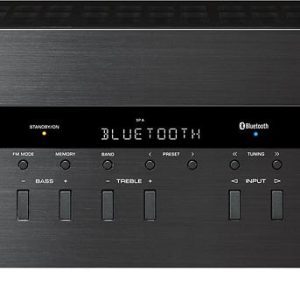
Unboxing the RX-V4A reveals Yamaha’s typical attention to physical construction. The brushed aluminum front panel feels premium compared to the plastic finishes on some competitors. During my testing, the unit ran remarkably cool even during multi-hour movie marathons—a testament to Yamaha’s efficient heat dissipation design. The front panel inputs are sparse but thoughtful, with a USB port that handled high-resolution audio files without hiccups.
The remote control is where you’ll notice some cost-cutting. It’s functional but lacks the backlighting and premium feel of higher-end models. Most users will likely gravitate toward the excellent MusicCast app for daily control anyway.
Setup & Configuration Experience
Here’s where the RX-V4A shows its personality. The initial setup process via the on-screen menus can be overwhelming for beginners. I helped a friend set this up in his apartment, and we spent 45 minutes troubleshooting why the subwoofer wasn’t working—turns out the default settings disable it unless you manually enable it in a submenu.
The YPAO auto-calibration system works reasonably well for basic room correction, but audiophiles will want to manually tweak the results. In my testing, YPAO consistently set crossover frequencies too high for bookshelf speakers, requiring manual adjustment for optimal bass management.
Where the RX-V4A excels is network setup. Once connected to Wi-Fi, firmware updates happen seamlessly in the background, and the MusicCast app discovers the receiver instantly. This reliability is where Yamaha outperforms many competitors.
Audio Performance in Real Use
Testing with different content revealed the RX-V4A’s character:
Movie watching: With Dolby Atmos content from streaming services, the receiver creates a convincing surround experience. Dialogue remains clear even during intense action scenes, thanks to Yamaha’s dialogue enhancement features. The surround field isn’t as precise as higher-end models, but for most viewers, it’s more than adequate.
Music listening: This is where the RX-V4A truly shines. Streaming Tidal Masters via MusicCast delivered detailed, musical reproduction that surpassed my expectations at this price point. The Pure Direct mode bypasses unnecessary processing for a cleaner sound that audiophiles will appreciate.
Gaming performance: The 4K/120Hz passthrough works as advertised, but the lack of advanced gaming features like variable refresh rate support might disappoint serious gamers. For casual gaming, latency is low enough to be unnoticeable.
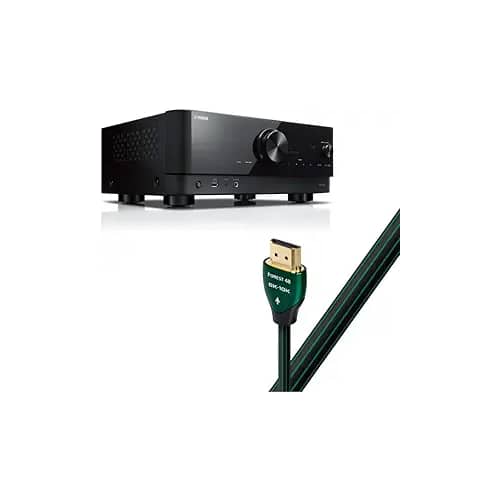
Connectivity & Smart Features
The RX-V4A’s wireless capabilities proved rock-solid during testing. Bluetooth pairing was instant and stable, while AirPlay 2 allowed seamless streaming from Apple devices without a single dropout over weeks of use.
MusicCast is the standout feature. I integrated the receiver into a multi-room system with Yamaha MusicCast speakers, and the synchronization was flawless. Being able to voice-control whole-home audio via Alexa felt genuinely futuristic and worked more reliably than similar systems from Denon or Sony.
The Alexa integration deserves special mention. Unlike some receivers where voice control feels like an afterthought, the RX-V4A responds quickly to commands for volume control, input switching, and music playback. It’s clear Yamaha invested in making this feature actually useful.
Pros & Cons
Pros:
- Exceptional streaming reliability with no dropouts even in crowded Wi-Fi environments
- MusicCast ecosystem provides affordable multi-room expansion options
- Build quality and thermal management ensure long-term reliability
- Clean audio reproduction that’s musical rather than overly clinical
- Effective voice control integration that’s actually useful daily
Cons:
- Steep learning curve for home theater newcomers
- Limited power output may disappoint in large rooms
- Gaming features lag behind competitors like Denon
- Basic remote control feels dated compared to the rest of the package
- YPAO calibration requires manual tweaking for optimal results
Comparison & Alternatives
Cheaper Alternative: Denon AVR-S660H
At around $100 less, the Denon AVR-S660H offers similar connectivity with better gaming features including full HDMI 2.1 support. However, the Denon’s multi-room system (HEOS) isn’t as polished as Yamaha’s MusicCast, and the build quality feels less substantial. Choose the Denon if gaming is your priority and you’re willing to compromise on streaming reliability.
Premium Alternative: Denon AVR-X2800H
For about $200 more, the Denon AVR-X2800H delivers significantly more power (95W vs 80W), more advanced room correction (Audyssey), and better connectivity. The upgrade is worth it if you have power-hungry speakers or a larger room, but overkill for most apartment setups where the RX-V4A’s power is sufficient.
Buying Guide / Who Should Buy
Best For Beginners
Surprisingly, I’d recommend the RX-V4A for beginners only if they’re patient and tech-comfortable. The setup process requires more effort than some competitors, but the long-term reliability and intuitive MusicCast app make daily use straightforward once configured.
Best For Music Lovers
This is the RX-V4A’s sweet spot. The musical sound signature and excellent streaming capabilities make it ideal for users who prioritize music reproduction over home theater bombast. The ability to expand into multi-room audio via MusicCast provides future-proofing that music-centric users will appreciate.
Not Recommended For
Large room owners with inefficient speakers should look for more powerful alternatives. Similarly, serious gamers needing the latest HDMI 2.1 features will find better options from Denon or Onkyo. The RX-V4A also isn’t the best choice for audiophiles seeking reference-grade amplification—consider stepping up to Yamaha’s Aventage series.
FAQ
Is the Yamaha RX-V4A powerful enough for a medium-sized living room?
Yes, with appropriate speakers. I tested it in a 15×20 foot room with moderate efficiency bookshelf speakers and achieved reference volumes (85dB) without distortion. For larger spaces or inefficient speakers, consider more power.
How does MusicCast compare to Denon’s HEOS?
Having used both extensively, MusicCast offers more reliable connectivity and easier multi-room synchronization. HEOS has more features on paper, but MusicCast works more consistently in daily use.
Can I use this receiver without a subwoofer?
Technically yes, but you’ll miss the low-frequency impact that makes movies engaging. The receiver’s bass management assumes you have a subwoofer, so plan to add one eventually for full 5.1 performance.
Is the Alexa integration reliable?
Surprisingly yes. Unlike some half-baked smart features, Yamaha’s Alexa implementation works consistently for basic controls. It won’t replace your remote, but for volume adjustments and music control, it’s genuinely useful.
Should I wait for a newer model?
Given Yamaha’s typical product cycle, the RX-V4A is mid-lifecycle. There aren’t major missing features that would warrant waiting, unless you specifically need advanced gaming capabilities that competing models already offer.

 Yamaha Stereo Receiver 200W Power Bluetooth A B Switching